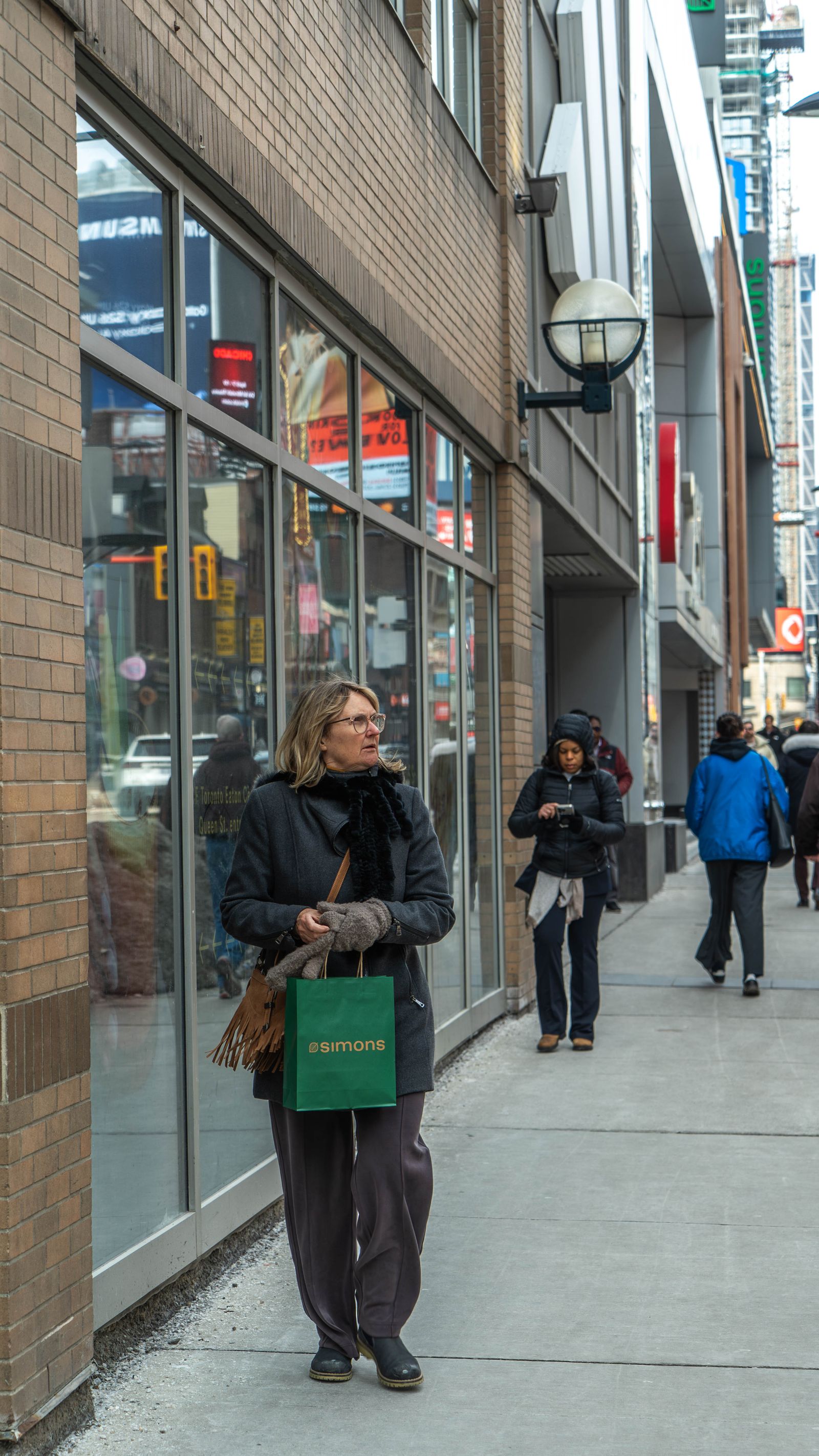
Listings tell you about bedrooms, bathrooms and square footage. They rarely tell you what it's like to run out of milk on a Tuesday night, pick up a prescription after work, grab a coffee before a school drop-off, or get to a gym without turning it into a 40-minute round trip.
That's what the Five-Minute Errand Test is for. It's a simple, practical way to measure how convenient a neighbourhood really is, using the errands you actually run every week. Here's how to do it, how to score it, and how some of Ottawa's best-known areas compare.
Good to know: the scorecard below is a simple framework we created, not an official measure. The Walk Score figures come from published sources that use different dates and boundaries, so they vary. Treat them as a guide, and always test the specific address you're considering. This guide was prepared on October 26, 2026.
The idea is simple. Stand at the front door of a home (or picture it) and ask: how many of my everyday errands could I do within a five-minute walk? A 15-minute walk? Or do I need a car, a bike or a bus?
Use real life, not an ideal. Groceries, a pharmacy, coffee, a gym or rec centre, the school or daycare, a park, and everyday services like a bank, post office, hair salon or library.
Use a map app, then try it on foot. Walk Score gives full points to amenities within about five minutes (roughly 400 metres) and fewer points as the distance grows, down to zero after a 30-minute walk. The City of Ottawa's planning goal is a 15-minute walk to daily and weekly needs.
Give each errand 3 points if it's within a five-minute walk, 2 for a 15-minute walk, 1 if it's a short bike, bus or drive, and 0 if it's longer or impractical. Add up the total.
Use this for any address you're considering. Eight errands, up to 24 points.
| Errand | 3 points | 2 points | 1 point | 0 points |
|---|---|---|---|---|
| Groceries | Full grocery store within 5 min walk | Within 15 min walk | Short bike, bus or drive | Long drive |
| Pharmacy | Within 5 min walk | Within 15 min walk | Short bike, bus or drive | Long drive |
| Coffee or café | Within 5 min walk | Within 15 min walk | Short bike, bus or drive | Long drive |
| Fitness or rec centre | Within 5 min walk | Within 15 min walk | Short bike, bus or drive | Long drive |
| Schools and childcare | Walkable, safe route, 5 min | Walkable, 15 min | Bus or short drive | Long commute |
| Park or green space | Within 5 min walk | Within 15 min walk | Short bike or drive | Far away |
| Everyday services | Bank, post, salon, library within 5 min | Within 15 min walk | Short bike, bus or drive | Long drive |
| Transit | Frequent stop within 5 min | Within 15 min walk | Short bike or drive to a stop | No practical option |
The categories sound simple, but the details matter. Here's what to check.
Is it a full-service grocery store or a corner store? A convenience store is fine for milk, but not for a weekly shop. Check hours, parking if you'll drive, and whether you'd realistically carry the bags home.
Look at opening hours and whether it's close to a clinic. Convenience matters most when someone is sick, so a late-hours pharmacy is a real plus.
This is the "third place" test: somewhere you can meet a friend or work for an hour. A good local café often says a lot about how lively a neighbourhood is.
Think gyms, studios, pools and community rec centres, and also running routes, pathways and parks. Ottawa's canal and river pathways count as fitness infrastructure.
Confirm school catchments with the school board, since boundaries change. Then walk the route: crossings, sidewalks, traffic and how far young kids can realistically go.
A bank branch or ATM, post office, hair salon or barber, dry cleaner, library and a family doctor or walk-in clinic. Individually small, together they decide how many car trips you take.
You could happily live car-light or car-free. Most of daily life is within a short walk.
Most errands are close. You'll walk for many things and use a bike, bus or car for the rest.
Some things are close, others need a trip. Planning your errands becomes part of life, and one car is usually essential.
Most errands need a car. That's fine if you like space and are happy to drive, but be honest about the trade-off.
Ottawa overall has a Walk Score of 45, which is considered car-dependent, with the average resident able to walk to about 12 restaurants, bars and coffee shops in five minutes. But the city is a patchwork, and a few neighbourhoods are far more walkable than the average.
| Neighbourhood | Published Walk Score | Typically close by | Often needs a trip |
|---|---|---|---|
| Centretown and ByWard Market | Roughly 90 to 97 | Groceries, restaurants, services, transit, the canal | Large-format shopping, some green space |
| The Glebe | Roughly 88 to 90 | Bank Street shops, cafés, specialty grocers, Lansdowne, the canal | Big-box shopping |
| Hintonburg | Roughly 87 to 90 | Wellington Street West restaurants, bakeries and shops | Some large grocery runs |
| Westboro | Roughly 82 to 88 in several sources; lower in some wider-area measures | Richmond Road shops and cafés, parks, the river | Depends on the street; some blocks are more residential |
| Barrhaven | About 41 | Pockets near shopping centres and main roads | Most errands, unless you live near a retail hub |
| Ottawa overall | 45 | Varies widely | Many errands |
The pattern is clear. The urban core and the older central neighbourhoods score highest, mixed-use areas along main streets like Richmond Road and Wellington Street come next, and most suburban communities are designed around driving. But there's a big caveat for suburbs: they often have pockets that are more convenient than the area average.
Centretown, ByWard Market, the Glebe and Hintonburg. You can often live without a car, though homes cost more per square foot.
Westboro and similar neighbourhoods with a village-style main street. A good balance of convenience and residential calm.
Suburbs like Barrhaven, Kanata, Orléans and Stittsville. Everything is spread out, but a home near the community's retail hub can feel very different from one on the edge.
Ottawa's Official Plan is built around "15-minute neighbourhoods," where daily and weekly needs like schools, groceries, transit, parks and libraries are within a 15-minute walk. The city's own baseline study found gaps in residential areas with few basic amenities, so some neighbourhoods will change over time. Check what's planned near any home you're considering.
A high score is a good sign, not a guarantee. Here's what to check in person.
A five-minute walk on a sunny October day is not the same as five minutes at -20°C with icy sidewalks. Try the walk in January, or ask neighbours how sidewalks are cleared.
Sidewalk quality, crossings, hills, lighting and traffic speed all affect whether you'd actually walk. A shop 300 metres away across a six-lane road may not feel close.
Convenience often comes with activity: traffic, patios, event days. Visit at different times, including a weekend evening.
A grocery store that's close but doesn't have what you need won't save you trips. Check that the businesses nearby match how you actually shop.
If the pharmacy closes at 6 p.m. and you work until 6:30, it isn't really convenient. Check hours against your routine.
Online grocery delivery and curbside pickup can make a car-dependent area easier, but they're not the same as walking to a market.
Convenience has a price. Walkable, central neighbourhoods usually cost more per square foot than car-oriented suburbs, so you often choose between a smaller home close to everything and a larger one where you drive.
Ottawa's September 2026 resale averages show the range: about $431,645 for an apartment, $543,337 for a townhome and $823,449 for a detached home. A condo in a walkable area and a detached home in a suburb are very different purchases, even before you count the car.
A car is one of a household's biggest costs. If living somewhere walkable lets you drop to one car, or none, that can offset part of a higher housing cost. If you'd still need two cars anyway, the savings disappear. Work out what your household would actually do before you pay a premium for walkability.
Run the scorecard on each home you're serious about, not just the neighbourhood. Two streets apart can be very different.
It's a useful starting point, but treat it as one input. It doesn't know your routine, your winters or whether you like the shops nearby.
Do the route on a weekday evening and a weekend morning. Watch how busy it is, how it feels and whether you'd want to do it daily.
The best home balances errands with your commute. A short walk to groceries doesn't help if work is an hour away.
Decide what convenience is worth to you. Many buyers find the sweet spot is a smaller home in a convenient pocket, not a perfect score.
What is the most walkable neighbourhood in Ottawa?
Centretown and the ByWard Market usually rank highest, with published Walk Scores in the 90s. The Glebe and Hintonburg follow closely, and Westboro is also well regarded. Scores vary by source and address.
What is a good Walk Score?
Walk Score rates addresses from 0 to 100. Higher scores mean more errands can be done on foot. Ottawa as a whole scores 45, which is considered car-dependent, while the most central neighbourhoods score in the high 80s and 90s.
What is a 15-minute neighbourhood?
It's a planning idea in Ottawa's Official Plan: a neighbourhood where residents can reach daily and weekly needs such as groceries, schools, transit, parks and libraries within a 15-minute walk.
Can I live without a car in Ottawa?
Yes, in the right neighbourhoods. Central areas like Centretown, the Glebe and Hintonburg make it realistic, especially near the O-Train and frequent bus routes. Winter and your work location are the big factors, so test it honestly.
Are suburbs like Barrhaven convenient?
They're designed around driving, with a Walk Score of about 41 for Barrhaven. But convenience varies a lot within each suburb. A home near a retail hub, school and park can score far better than one on the edge.
Does a convenient neighbourhood cost more?
Usually, per square foot. Walkable, central areas tend to be pricier, though condos and townhomes can make them more accessible. The offset can be lower transportation costs, if you can reduce the number of cars you need.
Want help finding a convenient neighbourhood in Ottawa?
The Ali Realty Group team can help you shortlist neighbourhoods based on your daily routine. Call us at 613-327-0131 or visit alirealtygroup.com.
The right home isn't just about the house. It's about the life around it: whether you can pick up groceries, grab a coffee, get to the gym and walk to school without planning a major expedition. The Five-Minute Errand Test turns that into something you can measure before you buy.
Try it on your own street first, then on the homes on your shortlist. From all of us at Ali Realty Group, happy house hunting.

